Happiness influenced by personality, not circumstances


This week’s QUOTE FOR STRESS

“The greater part of our happiness or misery depends on our dispositions and not on our circumstances.”

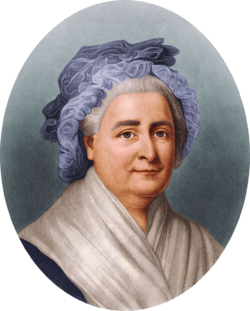
These are the wise words of Martha Washington, wife of the First President of the USA who was in office from 30 April 1789 – 4 March 1797.

The life of Martha Washington makes interesting reading as she came from an era when most women were illiterate and the wealthy folk had slaves. Thank goodness, times have changed! She was wealthy in her own right and so benefitted from privileges that were denied most women. Widowed as a young mother, she then married Geroge Washington with whom she had no children. The marriage was a happy one.

Martha obviously never had access to any ‘psychology’ education. Little did she know that when she was sharing an important psychological truth when she said ‘the greater part of our happiness or misery depends on our dispositions and not on our circumstances’. This belief became the backbone of Cognitive Behavior Therapy made famous in the latter part of the 20th century. This therapy is regarded as the most successful in the treatment of depression and one of the basic principals says that it is not the things that happen to you that cause depression but rather your interpretation of that event.

Click here to read more about Cognitive Behavior Therapy. This will take you to another one of my sites.
Attitude is everything!

This week’s QUOTE FOR STRESS:

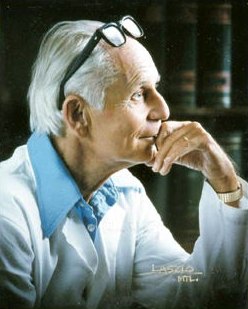
“Adopting the right attitude can convert a negative stress into a positive one.” Hans Selye

Scientist Hans Selye (1907 – 1982) developed a General Adaptation Syndrome model showing the three phases of stress and the effects on the body. According to Selye, chronic stress causes long-term chemical changes in the body and is therefore a major cause of disease.

3 PHASES OF SELYE’S GENERAL ADAPTATION SYNDROME

Alarm Stage

This is also known as the fight or flight response where stress hormones are released for immediate energy. This energy needs to be used up in physical activity so the stress hormones like cortisol, adrenaline and noradrenaline do not harm the body, particularly the heart.

Resistance Stage

As the source of stress is being sorted out, the body begins to restore its balance and starts recovering. If the stress continues the body remains in a constant state of vigilance or arousal.

If there is no time for recovery the person will proceed into the next phase.

Exhaustion Stage

All adaptation energy supply is depleted and the result is burnout, chronic anxiety and depression. The stress levels go up and stay up. This stage is dangerous to your health and can damage nerve cells and body organs. Thinking as well as memory are also affected.

The Answer?

The answer is really quite simple! We have to learn better ways of dealing with stress. With our hectic lifestyles, this is easier said than done, but for the sake of good health our responses to stress need to be re-examined. We need to change our attitudes. Stress is a known cause of depression so to overcome depression it is essential to learn how to deal with it.

“Adopting the right attitude can convert a negative stress into a positive one.” Hans Selye

The Stress of Life by Hans Selye is available from Amazon and has good online reviews.

Please register for our Free 5 Part Overcoming Depression Course which focuses on learning how to deal with stress, particularly as regards changing the way we think.


Perceptions trigger stress!

This week’s QUOTE FOR STRESS

“When we change our perception we gain control. The stress becomes a challenge, not a threat”. Greg Anderson

Stress is the cause of depression.  Stress is created from our perceptions, how we view a situation. When my children were younger we regularly went for hikes in the mountains. Being rather unfit, my thoughts often went along the lines of “I hope I make it to the top without having a heart attack! I wasn’t exactly sure where the rescue helicopter would land if I did.” Might sound silly, but then most of us have silly thoughts at times. It was an upward struggle and I certainly didn’t think of the view from the top. However my children and husband would just about sprint to the top, in their eagerness to look at the view from the top!

Different perceptions about the same event. I do have to admit that once at the top, I did feel very proud of myself!

If you would like to learn more about how to change your perceptions please click here to find out an easy step by step method. This change can make all the difference in enjoying life to the full.

Enemy outposts!

This week’s QUOTE FOR STRESS

“It’s hard to fight an enemy who has outposts in your head.” Sally Kempton

During war, enemy planes can be expected to fly overhead but no country in their right mind would give landing rights to an enemy plane. That would be plain stupid! But isn’t that what we do much of the time. When a person is battling with stress, battling with burnout, enemy thoughts are flying around shouting “you’re stupid, you’re worthless, you’re guilty, you’re unlovable”. And as each enemy thought attacks, we give it landing rights when we accept and believe these thoughts to represent the truth. These enemy thoughts then establish themselves in our minds. They set up ‘outposts in our heads’, waiting to attack, very efficiently, from behind the front-lines! Having been given landing rights, we no longer recognize them as the enemy.

The trick is to not to give these enemy thoughts landing rights in the first place. When these negative enemy thoughts enter your head, tell them what to do! Give them marching orders and never, ever believe that you are stupid or useless. It is just the stress that is causing your thinking to go a bit hay-wire!

For a very interesting perspective about this subject from a Christian point, known as the Battle of the Mind of view please click here. This will take you to another one of my sites.

Self-fulfilling prophecy!


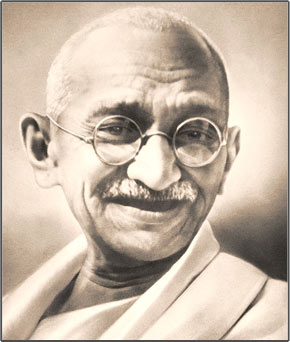
This weeks quote for stress comes from Mahatma Gandhi.

“A man is but the product of his thoughts. What he thinks, he becomes.”

Let me start with a bit about Mahatma Gandhi – He was born on the 2 October 1869 and died on the 30 January 1948. This peace-loving man was tragically assasinated by shooting. He led India to independence and inspired movements for civil rights and freedom all over the world. In India he is called Bapu, which means Father and he is officially honored as the Father of the Nation.

Let’s take a moment to think more about this quote. What we do and how we behave has to match up with what we believe about ourselves, what we think. We make our beliefs come true, because we behave in a way that matches what we believe.  It cannot work in any other way.

Let me give an example. A person goes for a job interview, but basically the person has the belief that he is not really any good. How is that person going to come across in the interview? Probably apologetic and displaying a lack of confidence. The end result? He’ll more than likely not get the job. On the other hand, a person who believes in himself, has confidence in his abilities is far more likely to present himself well and get the job.

What we believe about ourselves has to come true because we have to be congruent, our behavior has to match our beliefs. So, whatever you are going to do, go for a job interview or even go on a date, look at what you believe about yourself. If you don’t like what you discover, you can then change those inner beliefs and go out acting with confidence!